Esports, short for electronic sports, has come a long way since its inception, transforming from a niche activity enjoyed by a small group of enthusiasts to a global phenomenon. In this blog, we will explore the evolution of esports, its current state, and what the future holds for this rapidly growing industry. Whether you are an avid gamer, a casual viewer, or someone interested in the cultural impact of digital sports, this post will provide a comprehensive overview of esports.
The Birth of Esports: A Look Back to the Early Years
The roots of esports can be traced back to the 1970s and 1980s, when competitive video gaming first began. In these early years, competitive gaming was not the polished, professional industry we see today. Instead, it was mostly about playing games at a local level with friends and fellow enthusiasts.
The First Tournaments
The first known esports tournament was held in 1972 at Stanford University. The event, titled “Intergalactic Spacewar Olympics,” was based on the game Spacewar, a popular arcade game. While this early competition was modest, it laid the groundwork for the competitive gaming scene.
In the 1980s, the rise of arcade games like Pac-Man, Donkey Kong, and Galaga led to more formalized competitions. Players would compete in local tournaments, and the winners would often be recognized with high scores on the arcade machines. However, these tournaments were small and had limited reach.
The Rise of Online Gaming
The real turning point for esports came in the late 1990s, with the advent of online gaming. As internet speeds improved and online multiplayer games like Warcraft II and Quake emerged, players no longer had to rely on local competitions. They could now connect with others around the world and compete in tournaments that were larger and more complex.
The 1997 Red Annihilation tournament, which was based on Quake, marked the beginning of modern esports as we know it today. The tournament, which was streamed live over the internet, attracted players from around the world and featured a grand prize—a Ferrari. This was a clear indication that competitive gaming was becoming a serious business, and esports was beginning to take shape.
Esports in the 2000s: A New Era of Competition and Globalization
The early 2000s marked a significant shift for esports. With the rise of popular games like Counter-Strike, Warcraft III, StarCraft, and Dota, competitive gaming began to evolve into a global industry. Esports was no longer confined to local LAN (local area network) events but was now being broadcasted online and on television. This period saw the rise of major esports organizations, tournaments, and professional players.
The Formation of Esports Leagues
In the early 2000s, esports leagues began to take shape. One of the most influential leagues to emerge during this time was the World Cyber Games (WCG), which was founded in 2000. The WCG quickly became one of the most prestigious esports tournaments, with players from around the world competing for the title of World Champion. This international event helped to solidify esports as a global phenomenon, attracting millions of viewers and players alike.
Another key development during this time was the rise of Major League Gaming (MLG) in North America. MLG was founded in 2002 and quickly became one of the most recognized names in the esports industry. The organization hosted high-profile tournaments for games like Halo and Call of Duty, attracting large crowds and offering substantial prize money. MLG’s success helped to bring esports into the mainstream, showcasing the potential for gaming as a competitive sport.
The Growth of Online Streaming
The development of online streaming platforms like Twitch in 2011 revolutionized the way esports events were viewed. Twitch allowed gamers to stream their gameplay to an audience, making it easier for fans to follow their favorite players and teams. This not only helped to expand the reach of esports but also created a new avenue for professional players and content creators to make a living.
Streaming services provided an interactive element to esports, as viewers could engage with players in real-time through live chats and donations. This shift to online streaming opened up a whole new world for fans and players alike, allowing esports to flourish even further.
The Present Day: Esports as a Multimillion-Dollar Industry
Today, esports is a multimillion-dollar industry, with professional players earning substantial salaries, sponsorships, and prize money. Esports tournaments, such as The International (Dota 2), League of Legends World Championship, and Fortnite World Cup, feature prize pools that can reach tens of millions of dollars. The total esports revenue in 2023 was expected to exceed $1.5 billion, a testament to how far the industry has come.
Professional Esports Teams and Players
Esports has evolved into a professional sport, with dedicated teams and players competing at the highest levels. These professional teams are often backed by major corporations and investors, with players earning substantial salaries through sponsorships, streaming, and tournament winnings.
The rise of esports organizations like Team Liquid, Cloud9, FaZe Clan, and Team Secret has brought a new level of professionalism to the industry. These organizations not only field teams for popular games but also manage brand partnerships, merchandise, and content creation. Many esports organizations have expanded their reach beyond gaming and into mainstream entertainment, with some even making deals with traditional sports franchises.
Individual players also enjoy significant financial success, with top-tier players earning millions of dollars over the course of their careers. The success of players like Faker (League of Legends), Ninja (Fortnite), and s1mple (Counter-Strike: Global Offensive) has cemented esports as a legitimate career path for talented gamers.
Major Esports Events and Viewership
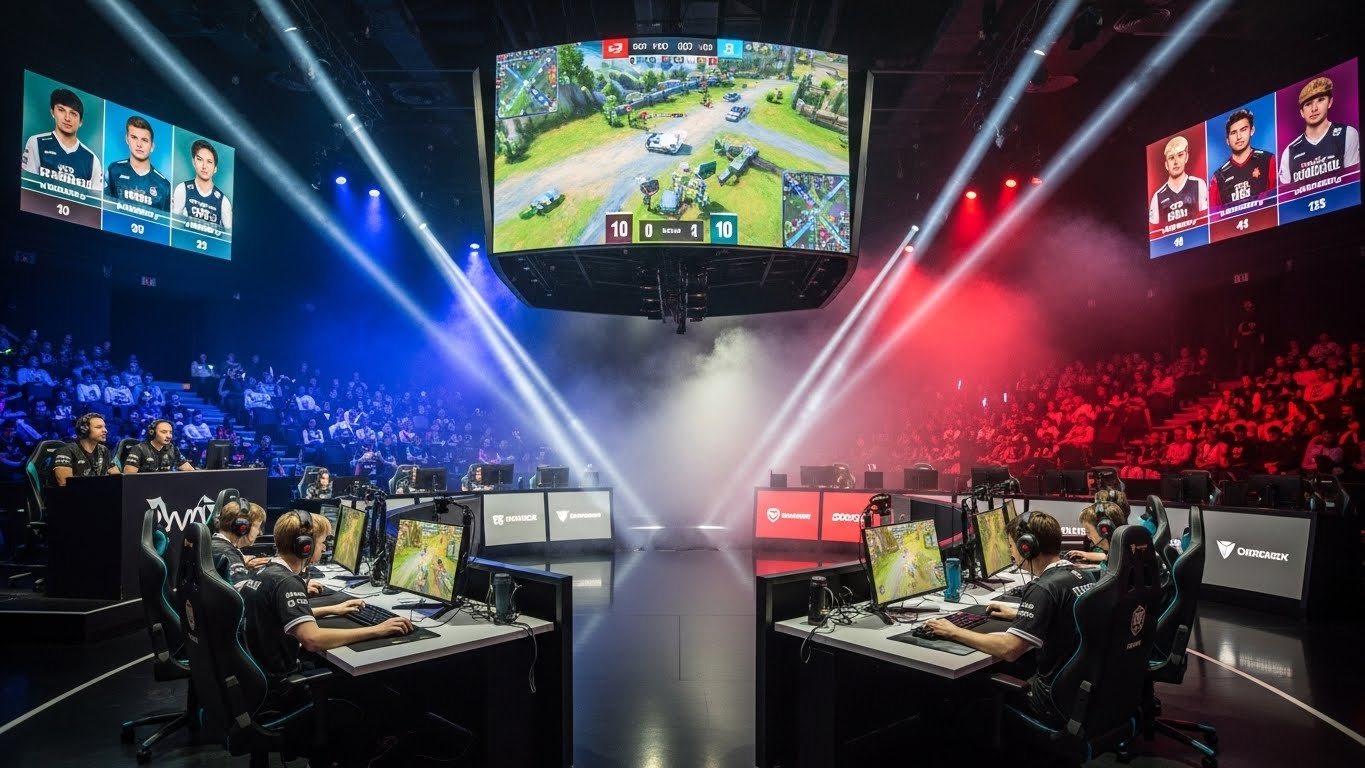
Esports events are now massive spectacles, attracting millions of viewers both online and in person. The League of Legends World Championship, for example, draws an audience of over 100 million viewers globally, rivalling the viewership of traditional sports events like the Super Bowl. These tournaments are held in large arenas and are often broadcasted live on streaming platforms such as Twitch, YouTube, and social media.
The scale of esports events has also led to partnerships with major broadcasters and media outlets. For example, the Overwatch League (OWL) has partnered with ESPN, ABC, and other networks to broadcast its games, making esports more accessible to mainstream audiences. The rise of esports broadcasting has also led to the creation of dedicated esports channels, further solidifying the industry’s place in the entertainment landscape.
Esports Sponsorship and Investment
The growth of esports has attracted the attention of major corporations, who now see the industry as a viable platform for advertising and sponsorship. Companies like Coca-Cola, Intel, Red Bull, and Nike have all invested in esports, sponsoring teams, players, and events. The presence of these global brands has given esports a level of legitimacy and visibility that was previously unattainable.
Esports sponsorship deals are lucrative, with major companies investing millions of dollars in marketing and branding opportunities. These partnerships not only benefit the teams and players but also provide valuable exposure for the brands involved. Additionally, companies from outside the gaming industry, such as automakers and technology firms, have increasingly sought to tap into the growing esports market.
The Future of Esports: What’s Next?
Looking ahead, esports shows no signs of slowing down. The industry continues to expand into new regions, attract new players, and evolve technologically. Here are some of the key trends and developments that could shape the future of esports:
The Integration of Virtual Reality and Augmented Reality
As technology advances, esports is likely to see the integration of virtual reality (VR) and augmented reality (AR) into its gameplay and viewing experience. VR could offer a more immersive experience for players, while AR could enhance the way fans interact with live events. These technologies could revolutionize both the competitive side of gaming and the way audiences experience esports tournaments.
The Rise of Mobile Esports
Mobile gaming has exploded in recent years, with games like PUBG Mobile, Free Fire, and Mobile Legends attracting millions of players. As smartphone technology improves, mobile esports is expected to become an even bigger part of the competitive gaming scene. Mobile esports tournaments are already gaining popularity in Asia and other regions, and this trend is likely to continue in the coming years.
Esports in the Olympics?
One of the most hotly debated topics in the esports community is whether or not esports will ever be included in the Olympic Games. While there are challenges to integrating esports into the Olympics, such as the lack of a universally recognized governing body and the different nature of competitive gaming compared to traditional sports, the possibility is being seriously considered by some Olympic officials. If esports were to be included in the Olympics, it would provide a major boost to the legitimacy and global recognition of competitive gaming.
Esports and Education
Esports is also beginning to make its way into the educational sector. Many universities now offer scholarships for competitive gaming, and some institutions have even created dedicated esports programs and facilities. This trend is likely to continue, with esports becoming an important part of the educational landscape.
The Expansion of Esports Into New Regions
While esports has already achieved widespread popularity in North America, Europe, and Asia, new regions such as Africa, South America, and the Middle East are starting to embrace competitive gaming. As internet infrastructure improves and gaming becomes more accessible, these regions are expected to become important hubs for esports talent and competition.
Conclusion
Esports has evolved from humble beginnings in local arcades to a global industry worth billions of dollars. The past two decades have seen remarkable growth, with esports becoming a legitimate career option for players, a multimillion-dollar business, and a cultural phenomenon. As technology continues to evolve and new markets open up, the future of esports looks incredibly promising.
Whether you’re a fan of the games, the players, or the events, there’s no denying the impact that esports has had on the world of entertainment. As the industry continues to grow and evolve, it will undoubtedly continue to captivate audiences and shape the future of competitive gaming.